It begins with silk-spinning worms and ends with a weaving process. Discover where does silk come from – from nature to man.
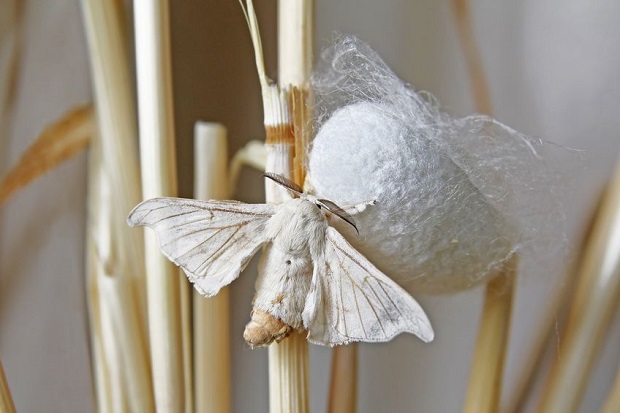
Silk fabric is made by unwinding the threads of the cocoons spun by the Bombyx mori, also known as the mulberry silk moth. The extracted silk is then made into threads and woven into a fabric. Here is the step-by-step process by which this happens.
Nature’s Role in the Silk-Making Process
- Moth’s Mating
- Egg Hatching
- Feeding Period
- Cocoon Making
Man’s Role in the Silk-Making Process
- Reeling the Filament
- Raw Silk into Thread
- Thread into Fabric
History of Silk Making

According to the writings of Confucius, the Chinese began the practice of silk-making in 2640 B.C. As legend has it, a silkworm cocoon fell into the Chinese princess Xi Ling Shi’s teacup. She unraveled it and discovered that it yielded a luxurious thread that stretched nearly a mile. She is believed to be the first to discover that these cocoons could be spun into silk threads that could produce fabrics. Silk-making then made its way to Asia and Japan sometime in the third century B.C., eventually spreading to many other nations. [1]
Sericulture
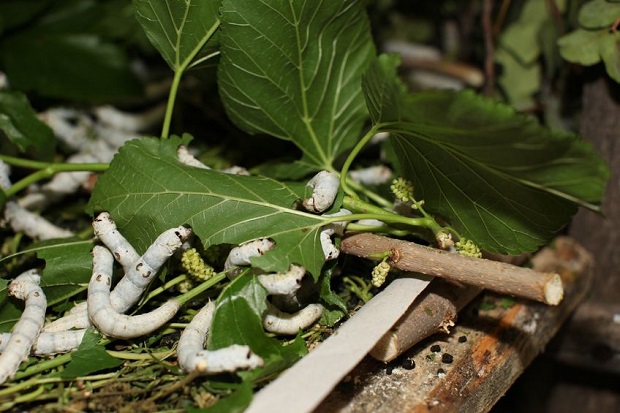
The silk-making journey begins with a process called sericulture. Sericulture, or silk farming, refers to the cultivation of silkworms for the purpose of obtaining silk. Here’s how it works.
Shortly after emerging from cocoons, male and female moths mate. The female lays 400-500 eggs and dies. After ten days, the larvae emerge and continuously feed while undergoing four growth stages until they are ready for their transformation. [2]
At approximately one month of age, the larvae begin spinning cocoons. The larvae excrete one continuous protein filament for three to eight days from their mouths. The cocoon forms as the larvae move hundreds of thousands of times in a figure-eight motion. Other glands secrete a gummy fluid known as sericin that binds the filament together. It continues this process until it is fully encased within the cocoon.[3]
Reeling the Filament
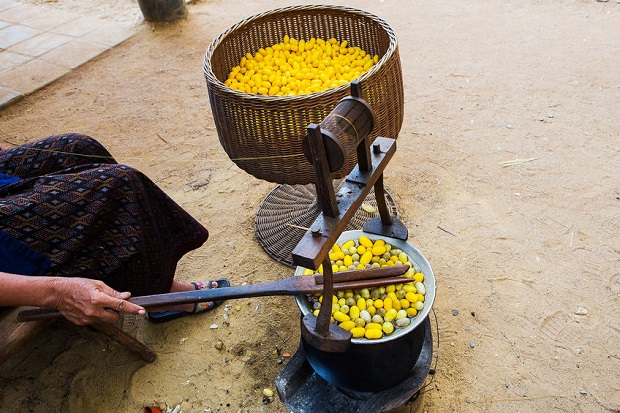
Unless requiring the moths for the egg-laying process, silk-making begins with boiling or steaming the moth-filled cocoon, which dissolves the sericin and releases the end of the filament. Silk makers then gather multiple threads and wrap them around metal or wooden reels. Rotating the reel unwraps the entire cocoon until only a disposable transparent casing containing the moth remains. [4]
The Silk Becomes Thread
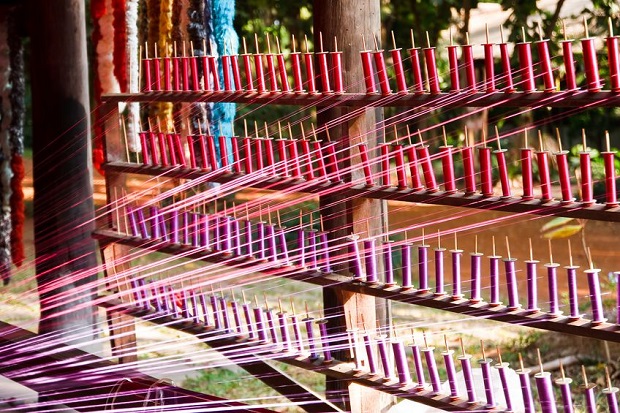
The unwrapping of the silk cocoon produces one of two different types of silk threads. One type of silk thread is called filament silk; the other is spun silk.
Filament silk is the shiniest, most luxurious silk. It is produced when the unwrapping process of the silk cocoon yields one continuous unbroken thread. By itself, this thread is too fragile to be used in sewing applications. Three to ten strands must be spun together to yield one strand of useable thread. [5]
Spun silk is made from broken cocoons, such as those that have successfully hatched a moth. Spun silk is also made from leftovers. These silk pieces are spun into thread in the same manner that cotton is spun into thread. [6]
Silk Threads Are Woven Into Fabrics
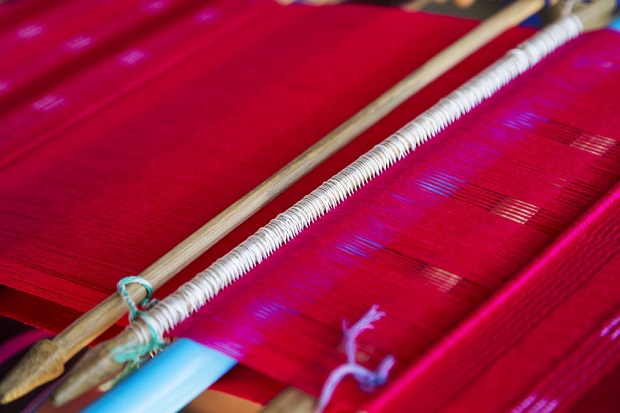
Once the silk has been spun into thread, it’s time to weave them together to create the luxurious fabric we call silk.
Fascinating Silk Facts and Statistics
- It takes approximately 2,500 quality cocoons or 3000 average-quality cocoons to yield one pound of silk.
- Silkworms need to eat 150 pounds of leaves to yield one pound of reeled silk.
- A female moth will lay from 400-500 eggs.
Resources
[1] “The History of Silk.” The Silk Association of Great Britain. N.p., n.d., Web 6 Feb 2020. http://www.silk.org.uk/history.php
[2] Goldsmith, Marian. “Silk and Silkworms.” Textiles Seminar. University of Rhode Island. 2015. Web 6 Feb 2020. https://digitalcommons.uri.edu/cgi/viewcontent.cgi?article=1030&context=textiles_seminar
[3] “Silkworm Cocoons.” Cocoon.org. N.p. N.p., n.d., Web 6 Feb 2020. http://cocoon.org/silkworm-cocoon/
[4] [6] “Sericulture.” Britannica.com. N.p., n.d., Web 6 Feb 2020. https://www.britannica.com/topic/sericulture
[5] Gleason, Carrie. The Biography of Silk. Crabtree Publishing Company. p. 12. 2006
Essig, E. O. Insects of Western North America; a Manual and Textbook for Students in Colleges and Universities and a Handbook for County, State and Federal Entomologists and Agriculturists as Well as for Foresters, Farmers, Gardeners, Travelers, and Lovers of Nature. The Macmillan Company, 1938.